
Cerberus: The Hound of the Underworld Explained
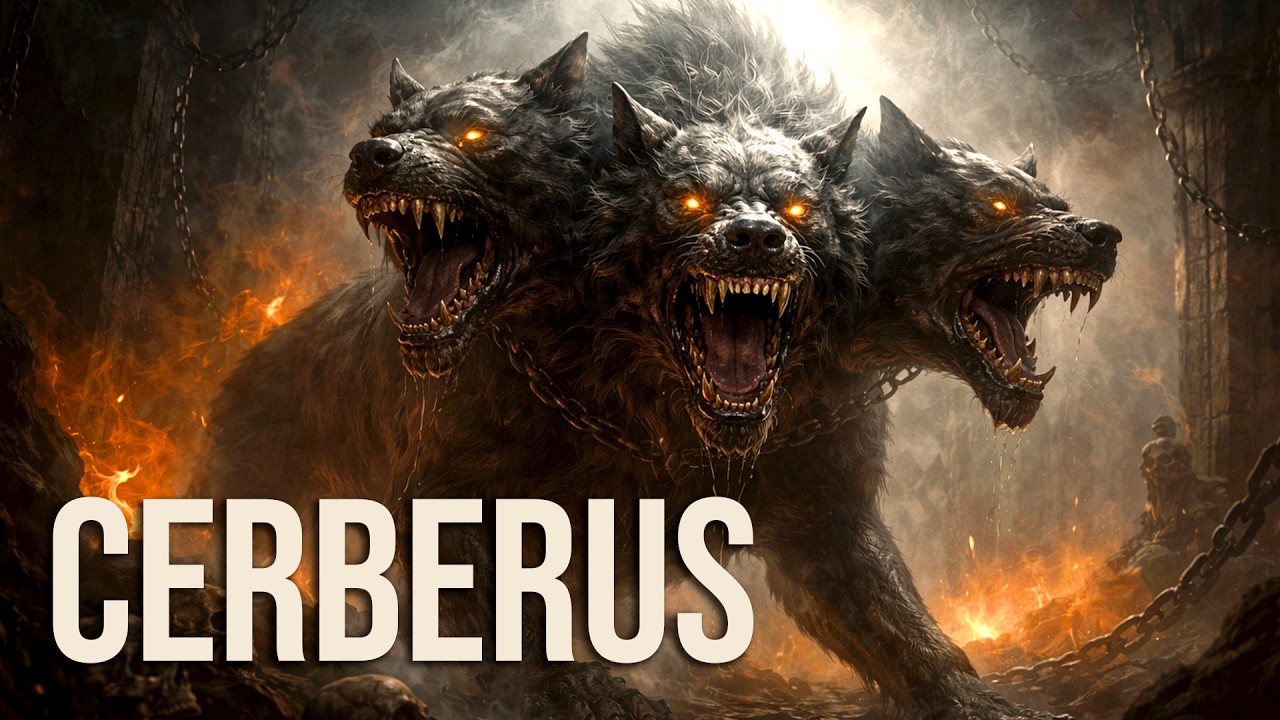
The Guardian of the Gates
Cerberus (or Kerberos) is the monstrous three-headed dog who guards the entrance to the Underworld in Greek mythology. His primary duty is to prevent the dead from leaving and the living from entering without permission. He is the offspring of Echidna (half-woman, half-snake) and Typhon (the most fearsome giant in Greek myth), making him brother to other famous monsters: the Hydra, the Chimera, and the Nemean Lion.
Typically depicted with three heads (though ancient sources sometimes mention fifty or even a hundred), a serpent for a tail, and snakes emerging from his back, Cerberus is a terrifying figure. Yet, he is not evil – merely a loyal servant of Hades, the god of the dead.
The Twelfth Labor of Heracles
The most famous story involving Cerberus is the twelfth and final labor of Heracles (Hercules). King Eurystheus commanded Heracles to bring back Cerberus from the Underworld – a task believed to be impossible. Heracles traveled to Eleusis, underwent the Mysteries to learn how to enter and return from Hades, and descended into the realm of the dead with the help of Hermes and Athena.
Heracles found Cerberus at the gates of Acheron. Without using any weapons (only his lion skin and brute strength), he wrestled the hound into submission, choked him into compliance, and dragged him to the surface. When he presented Cerberus to Eurystheus, the king was so terrified that he hid in a jar and begged Heracles to return the dog to the Underworld – which he did.
Other Encounters with Cerberus
Few mortals have faced Cerberus and survived. Orpheus, the legendary musician, charmed Cerberus with his lyre to gain entry to retrieve his wife Eurydice. Aeneas, the Trojan hero, was allowed to pass after the Cumaean Sibyl threw Cerberus a drugged honey cake (a “sop for Cerberus” – the origin of the phrase). Psyche, during her tasks for Aphrodite, also gave Cerberus a cake to distract him.
Symbolism and Modern Legacy
Cerberus represents the boundary between life and death, the inescapable guardianship of the afterlife. The phrase “a sop to Cerberus” refers to a bribe or appeasement. In modern culture, Cerberus appears in literature (Dante’s Inferno), video games, films (Harry Potter and the Philosopher’s Stone – Fluffy), and as a symbol of security.
Frequently Asked Questions about Cerberus
Usually three, though some ancient writers gave him fifty or even one hundred. The three heads are the canonical representation today.
The etymology is uncertain, but it may derive from the Proto-Indo-European word for “spotted” – making Cerberus literally “Spot” (akin to naming a guard dog “Rover”).
Heracles captured Cerberus as his twelfth labor, without using weapons – only his strength.
No, he is a neutral guardian. He is loyal to Hades and does not harm the dead or those permitted to enter. He only attacks those trying to escape or intrude.
Watch it for free on YouTube at Antiquity Illustrated. Subscribe for new myths every week.